# Exception transitions

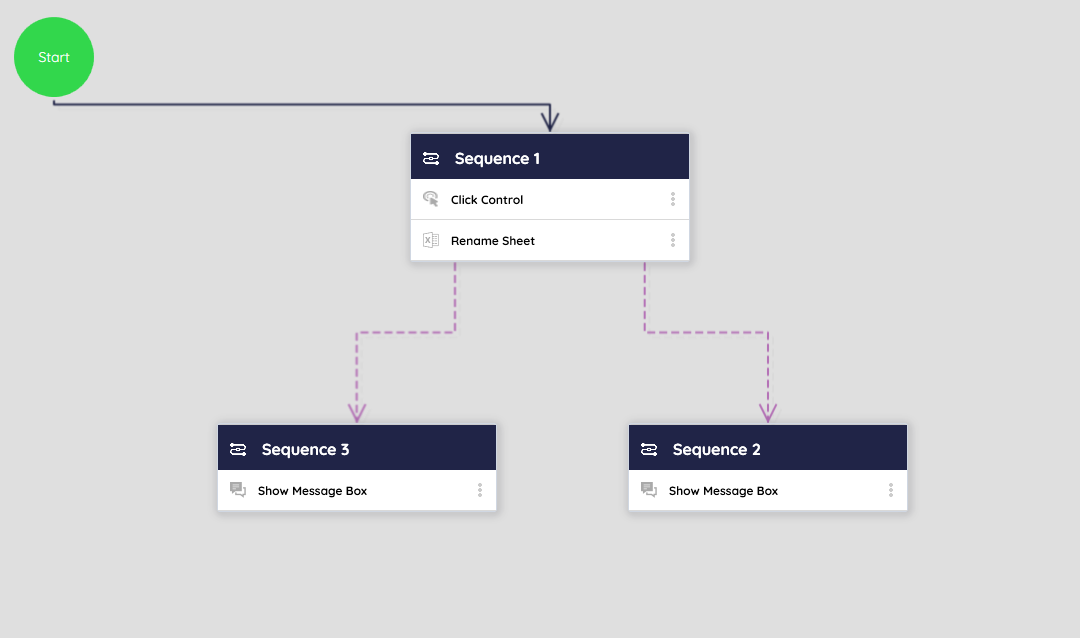
Exception transitions visually differ from normal transitions. They are represented by a dashed line instead of a solid line and are also displayed in a different color.

Typically, when a sequence throws an error, it stops execution. However, if an exception transition connects it to another sequence, the operation will continue and proceed to the linked transition.

<figure><img src="https://649489153-files.gitbook.io/~/files/v0/b/gitbook-x-prod.appspot.com/o/spaces%2F-MSSr3DfBuOYIkk2T9ec%2Fuploads%2FnyxR3cirNFslSpJRyerh%2Fimage.png?alt=media&#x26;token=6ab29217-8ecc-46d0-8b98-56a3a94dca09" alt=""><figcaption><p>In this example, if Sequence 1 throws an error, the robot will proceed to the Sequence 3 instead of Sequence 2.</p></figcaption></figure>

Like normal transitions, exception transitions also allow conditions to be specified within them.

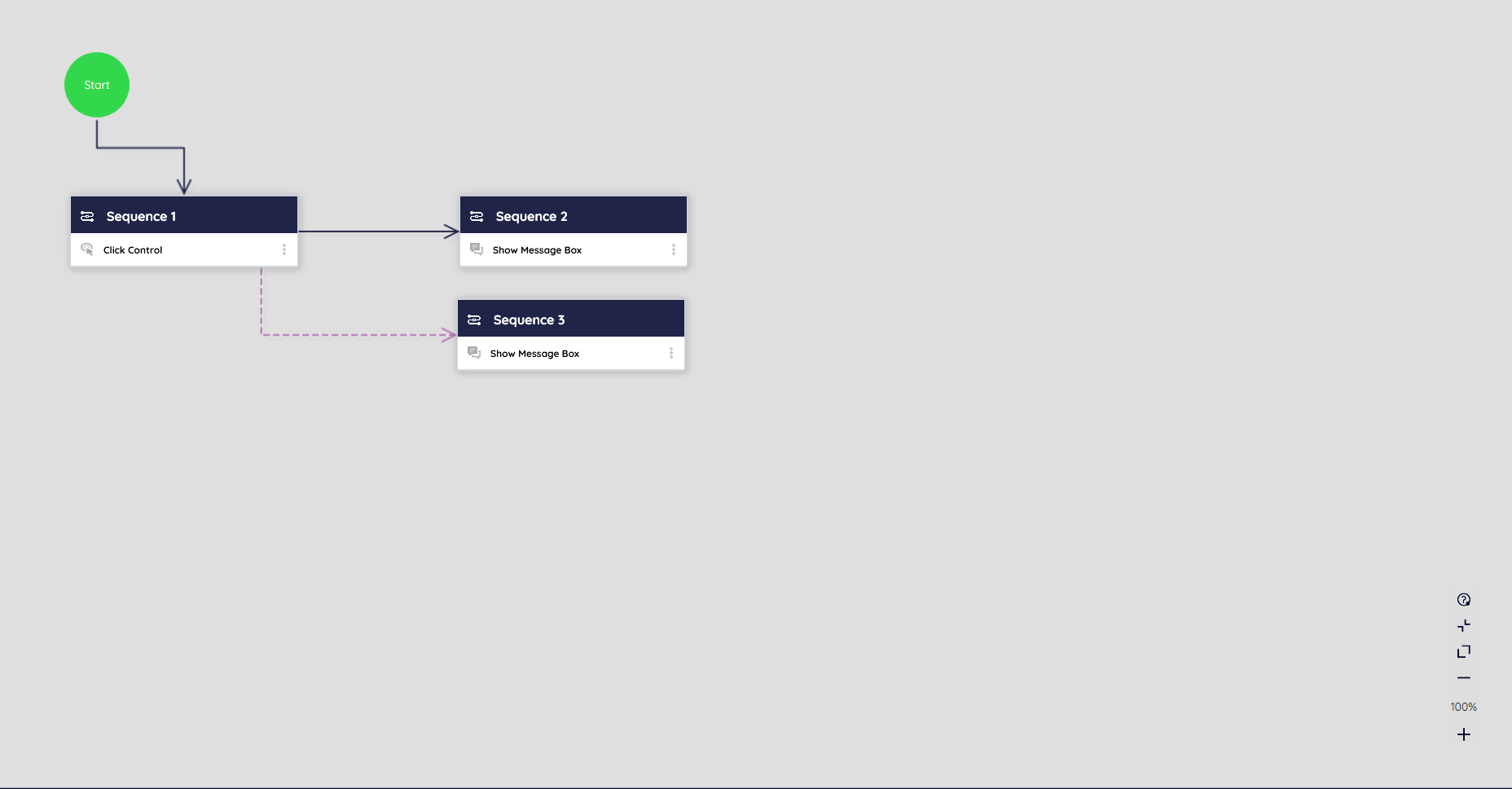
A sequence can contain multiple exception transitions for precise control over the workflow:

<figure><img src="https://649489153-files.gitbook.io/~/files/v0/b/gitbook-x-prod.appspot.com/o/spaces%2F-MSSr3DfBuOYIkk2T9ec%2Fuploads%2Fbc9Zg7AGR1vcgP9Vyamm%2Fimage.png?alt=media&#x26;token=ed582199-d9a2-4d04-9b84-298c91d7319c" alt=""><figcaption><p>In this example, if either Click Control or Rename Sheet throws an error, we can create a transition for either of them.</p></figcaption></figure>

### Useful conditions:

LastError.ActionMessage -> Contains the message of the last error.

LastError.ActionOutcome -> Contains the message showing the outcome of the action: ***True/False***

LastError.Matches("") -> Can be used to check if an error matches a given string.