> For the complete documentation index, see [llms.txt](https://docs.tailent.com/llms.txt). Markdown versions of documentation pages are available by appending `.md` to page URLs; this page is available as [Markdown](https://docs.tailent.com/actions/tap-actions/mail/save-outlook-365-attachments.md).
# Save Outlook 365 Attachments
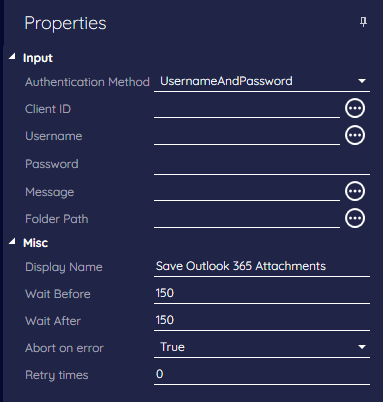
This action can be used to save attachments from an outlook message.
## Properties
### Input
* **Authentication method**: Username and Password
* **Client ID**: the Azure AD Application (client) ID
* **Username**: username for your Outlook inbox
* **Password**: password for target mail account
* **Message**: specifies the message whose attachments should be saved
* **Folder Path**: specifies the folder where attachments should be saved to
### Output
* **Output**: set an existing variable or define a new one that stores the captured value. Must be of type **List\.**
### Misc
* **Display Name**: action display name in your implementation project.
* **Wait Before**: number milliseconds robot to wait before executing the action.
* **Wait After:** number milliseconds robot to wait until moving to the next action.
* **Abort on Error**: True/False
* **Retry Times**: Specifies the number of times to retry an action if it doesn't end successfully. Default value 0 (no retry); Use -1 if you want to retry indefinitely.
## Use cases
### Potential use cases
* Save attachments from an Outlook message.
The article doesn't fully answer your question, or you want to find out more? Ask your question in the comments, on our community forum, or contact our support team or your account manager. Whatever works for you, your question will find its answer soon!